
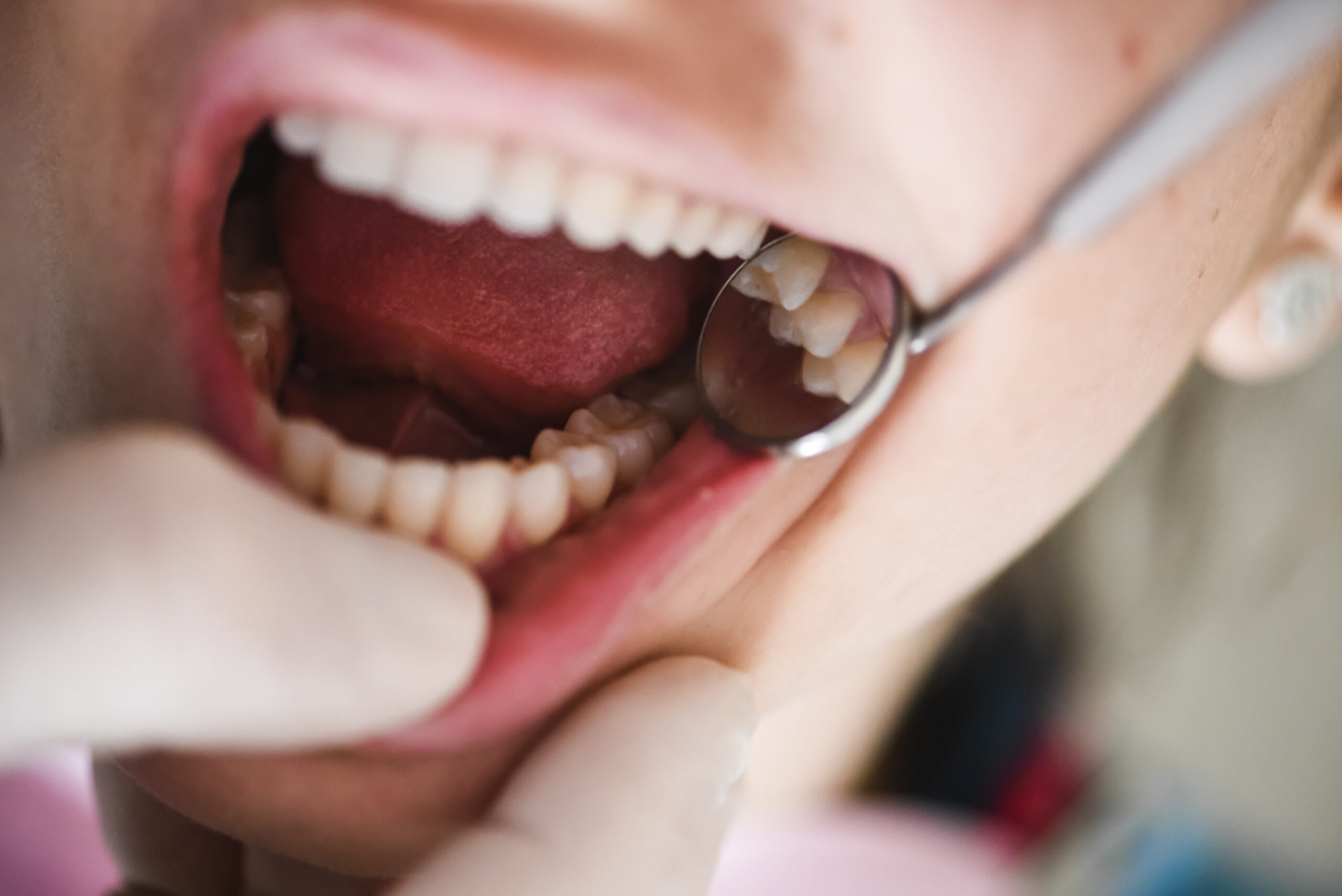
Tooth decay occurs when the minerals on the surface of the teeth dissolve, and can spread deeper into the tooth to create holes, cavities, and sometimes infections. It’s a common condition in Australia, especially as modern diets tend to be high in sugar and starch, the primary acid-inducing substances.
Our Williamstown dentists explore the common symptoms and early signs of tooth decay, helping you understand what to expect and how to catch it early. If you think you have tooth decay, it’s best to speak to a dentist in Melbourne as soon as possible, before it becomes severe.
What Are the Symptoms of Tooth Decay?
The symptoms of a decaying tooth are generally not noticeable until they develop to a later, severe stage of decay. However, knowing what to look out for can help you seek treatment early, before cavities or holes begin to appear.
| Stage | What’s Happening | Common Symptoms |
| 1. White spot lesions on tooth surface (early demineralisation) | Acid starts dissolving minerals in the outer enamel | Usually no pain (may see a chalky white spot on the tooth surface) |
| 2. Enamel decay (mild stage) | Decay breaks through the enamel surface | Still often painless, possible mild sensitivity to sweets or cold, & visible discoloration (white, brown, or black spots) |
| 3. Dentin decay (advanced stage) | Decay reaches the softer layer under the enamel (dentin) | Noticeable sensitivity to hot, cold, or sweet foods, occasional twinges of pain (decay progresses faster since dentin is softer) |
| 4. Pulp involvement (fully-developed stage) | Decay reaches the tooth’s nerve and blood vessel center | Spontaneous or persistent toothache, pain when biting or chewing, increased sensitivity that lingers |
| 5. Abscess formation (severe stage) | Bacteria infects the pulp and spreads to the root tip or surrounding bone | Severe, throbbing pain, swelling of the face or gums, fever, bad taste in the mouth, possible pus discharge, pain may sometimes suddenly stop if the nerve dies (this doesn’t mean it’s healed) |
Unfortunately, fully formed cavities and tooth decay will not heal on their own. They may progress slowly, but without seeking professional treatment, they will gradually worsen overtime. Symptoms will persist and become more severe as the decay spreads into the tooth’s inner dentin and reaches the nerves.
Early Signs of Tooth Decay
The early stage of tooth decay is a critical time to seek treatment. The earlier tooth decay is diagnosed, the less complex and usually cheaper the treatment is. For severe cases, your tooth may require extraction or cosmetic treatments, such as dental implants in Melbourne, which can be costly.
The first sign of decaying teeth is small, white discolouration on the tooth’s surface that generally starts close to the gumline. This dull, chalky white area on the enamel shows where minerals have been lost. It occurs because bacteria in the mouth feed on sugars from food and produce acids that can dissolve the hard minerals on teeth. This is where the first stages of tooth decay begin to develop.
Mild, intermittent sensitivity or slight texture changes are also common signs of early tooth decay. However, more often than not, there are little to no symptoms at this stage. Because mouth acids are only slowly dissolving the outer minerals, the decay has not yet reached the sensitive parts of the teeth. Pain is rare in the early stages, though small bursts of sensitivity-induced pain can occur.
What Does Tooth Decay Look Like?
Tooth decay changes in appearance as it develops and feeds on the minerals in your teeth. To begin with, as previously discussed, decay looks like small, chalky white spots on the tooth’s surface.
As it worsens, these spots slowly turn light brown, yellow or dark brown as the decay starts damaging the enamel and outer dentin. The surface of your teeth may feel rough or jagged to the touch.
Cavities and holes are the next development once the enamel has broken down. These look like dark brown or black pits, craters and holes. It’s common for pieces of the tooth to chip away, with a grey undertone taking over the entire tooth.
At the most severe stage, where the decay has reached the inner nerves and blood vessels, the most obvious signs begin to show. Redness and swelling can occur on the gums surrounding the decaying tooth and spread to the surrounding tissue.
Pimple-like bumps of pus also form around these swollen areas. Some people may also experience facial swelling, whereby the cheeks are hot to touch and red.
It’s important to note that many cavities, especially those located between teeth or deep inside the grooves of back molars, can’t be seen in the mirror.
Dentists can find these hidden areas using physical tools and dental x-rays, where decay appears as a dark shadow inside the tooth structure.
If you suspect you may have a decaying tooth, contact a dental practitioner as soon as you can. Managing early signs with a dentist can prevent the decay from escalating to the more severe, later stages.
Tooth Decay Pain
Initially, tooth decay doesn’t cause any pain. Sensitivity may accompany the stage where acids begin to dissolve tooth minerals. However, pain generally does not develop until the decay has reached the inner dentin and nerves of the tooth.
Once the decay reaches the dentin, slight or intermittent pain may start. This is because the dentin within a tooth connects to nerve endings. While pain may occur, it is more likely only triggered by hot or cold, and sweet or sour sensitivity.
However, at the severe stage of tooth decay, pain is more persistent, intense and lingering. At this stage, the decay has reached the nerves and potentially the pulp within the root of the tooth. Sharp, throbbing pain can be extreme and will not fade on its own.
An infection may also occur within the pulp, which can result in fever, along with symptoms such as body aches, headaches, joint pain and weakness.
It’s important not to wait until pain becomes severe before seeking treatment, as this can complicate the healing process. Waiting too long may also mean pain takes longer to fade after treatment.
Teeth Decay Sensitivity
Tooth decay is accompanied by sensitivity much earlier in the progression of deterioration than pain. This is because, before the decay reaches the nerves, it still thins the protective enamel.
Exposing, even slightly, the nerve endings of the teeth can cause severe sensitivity to hot or cold, and sweet or sour substances.
Why Decay Causes Pain:
- Enamel loss: Bacteria destroys the hard outer shell of the tooth
- Dentin exposure: Tiny channels in the dentin lead straight to the tooth nerve
- Triggers: Hot, cold, sweet, or acidic foods reach these pathways and cause a sharp sting
However, sensitivity is not always a marker of tooth decay. Teeth can become sensitive naturally through ageing as the enamel wears down. Some people can be born with sensitive teeth.
It’s more important to focus on the changes of this sensitivity, and whether or not it has worsened or is triggered by other substances.
To make sure the sensitivity is related to decay, there are some key things to look out for in tandem with a change or development in sensitivity:
- Sensitivity is localised to one specific tooth
- Visual changes to the tooth’s surface
- Sensitive toothpaste does not help
- Comes in association with any other previously discussed symptoms
How is Tooth Decay Diagnosed?
Tooth decay can be noticed at home, but it must be diagnosed and treated by a dental professional. A dentist will use specific tools, x-rays and examinations to determine whether tooth decay is the cause behind symptoms.
Diagnostic Methods:
- Visual Examination: Dentists look inside the mouth for chalky white spots, discoloration, or visible holes (cavities).
- Tactile Exploration: Dentists use a fine metal tool called a dental explorer to gently feel the tooth surface for soft or sticky areas.
- Dental X-rays: Bitewing X-rays reveal hidden decay located between teeth or beneath existing fillings where the naked eye cannot see.
- Laser Fluorescence: Some modern clinics use specialised laser light devices to measure tooth density and detect early mineral loss.
Treating Tooth Decay
Treatment depends on the severity of the decay. Early detection can result in a faster, less invasive treatment. However, if the decay has been left to develop for an extended period of time, dentists may recommend tooth replacements, such as single or all-on-4 dental implants in Melbourne.
Common Treatments by Severity
- Fluoride Treatments: Used for very early decay to help repair and strengthen the outer tooth layer (enamel)
- Fillings: Used when a small hole or cavity forms, where a dentist removes the ‘bad part’ and fills the space with composite or porcelain.
- Crowns: Used for large cavities or weak teeth, where a custom cap covers and protects the whole tooth.
- Root Canals: Used when decay reaches the inner nerve (pulp), where a dentist cleans out the infected tissue and seals the tooth.
- Extractions: Used when a tooth is too damaged to save, where the tooth is pulled out completely (generally involves replacements).
Preventing Dental Tooth Decay
There are numerous prevention strategies for tooth decay, both at-home and in-chair. Personal oral hygiene is one of the biggest, ensuring your teeth are well looked after will help protect the enamel from damage.
However, there are some less known strategies that should be considered when asking about how to prevent tooth decay.
| Prevention Strategy | What to Do | Why It Helps |
| Brush properly | Brush twice daily with fluoride toothpaste, for about 2 minutes each time | Removes plaque and food debris (fluoride strengthens enamel and helps reverse early decay) |
| Floss daily | Clean between teeth once a day | Removes plaque and food particles brushing can’t reach, especially between teeth and along the gumline (where decay typically starts) |
| Limit sugary & starchy foods | Cut back on candy, soda, chips, and snacking throughout the day | Bacteria feed on sugar and starch, producing acid that erodes enamel (frequent snacking means more acid attacks) |
| Drink water, especially fluoridated | Choose tap water over sugary drinks & sip water after meals | Rinses away food particles and acid (fluoride in tap water helps remineralise enamel) |
| Chew sugar-free gum | Chew after meals, especially xylitol-based gum | Stimulates saliva flow, which neutralises acid and washes away debris |
| Eat teeth-friendly foods | Include cheese, nuts, crunchy fruits/veggies, dairy | Some foods neutralise acid or stimulate saliva (calcium and phosphates help strengthen enamel) |
| Avoid frequent snacking/grazing | Stick to set mealtimes when possible | Gives saliva time to neutralise acid and repair enamel between exposures |
| Get regular dental checkups | Visit the dentist every 6 months (or as recommended) | Catches early decay (like white spot lesions) before it worsens (allows professional cleaning) |
| Consider dental sealants | Ask your dentist about sealants, especially for kids | Creates a protective barrier over molars’ grooves, where decay commonly starts |
| Consider fluoride treatments | Ask about professional fluoride varnish or rinses, especially if high-risk | Provides a concentrated boost to help remineralise weakened enamel |
| Avoid tobacco products | Don’t smoke or use chewing tobacco | Reduces saliva flow and increases risk of decay and gum disease |
| Address dry mouth | Talk to your doctor/dentist if you have chronic dry mouth (e.g from medications) | Saliva is a natural defense against decay (low saliva flow raises cavity risk significantly) |
When Should You See a Dentist?
When it comes to tooth decay, it can be hard to recognise when to visit a dentist. As signs and symptoms can be hard to determine until the more severe stages of tooth decay, many people will only visit a dentist once the decay becomes complicated.
Regular dental check-ups, usually every 6 months, can help ensure your teeth are being well looked after and are not in the early stages of decay. However, if you are concerned about visual changes to your teeth or their sensitivity, you should visit a dentist.
Any concerns, regardless of how minor, should be brought to the attention of a dental professional. This ensures that the decay, if present, can be caught early, preventing it from developing into the nerves and pulp of a tooth.
Contact our team at Parker Dental to discuss your concerns. We can perform an examination to determine whether decay may be present, and provide solutions regardless of what stage you’re at.