Dental Implants
in Melbourne
- Advanced Implant Technology
- Experienced and Caring Specialists
- Comfortable, Stress-Free Experience
03 9397 6021

Parker Dental is a leading dental implant professional in Melbourne, offering a customised plan of action to restore your smile. We know that this goes deeper than building a beautiful smile— quality dental implants can change your life.
Focusing on exceptional patient care, we provide high-quality dental implants, establishing a strong foundation for long-term oral health.


Why Choose
Dental Implants?
Dental implants are a long-term solution to tooth loss. Whether you’re missing one, several, or all your teeth, we can create a customised implant to get your smile back.
The advantages of dental implants:
- Supports your jawbone density and prevents the gradual disintegration associated with missing teeth.
- Has significant longevity compared to solutions like dentures, and although the tooth may need to be replaced at some point, the implant can last indefinitely with proper care.
- Restores your smile and confidence.
- Natural
- Durable
- Functional
03 9397 6021
Types of Implants
We offer two types of dental implants to restore your smile: Single Tooth Implants, designed to replace individual missing teeth with a natural look, and Implant Bridges, which fill gaps left by multiple missing teeth for a stable, lasting solution. Both options are customised to meet your dental needs for a confident, complete smile.
03 9397 6021
01
Single Tooth Implants
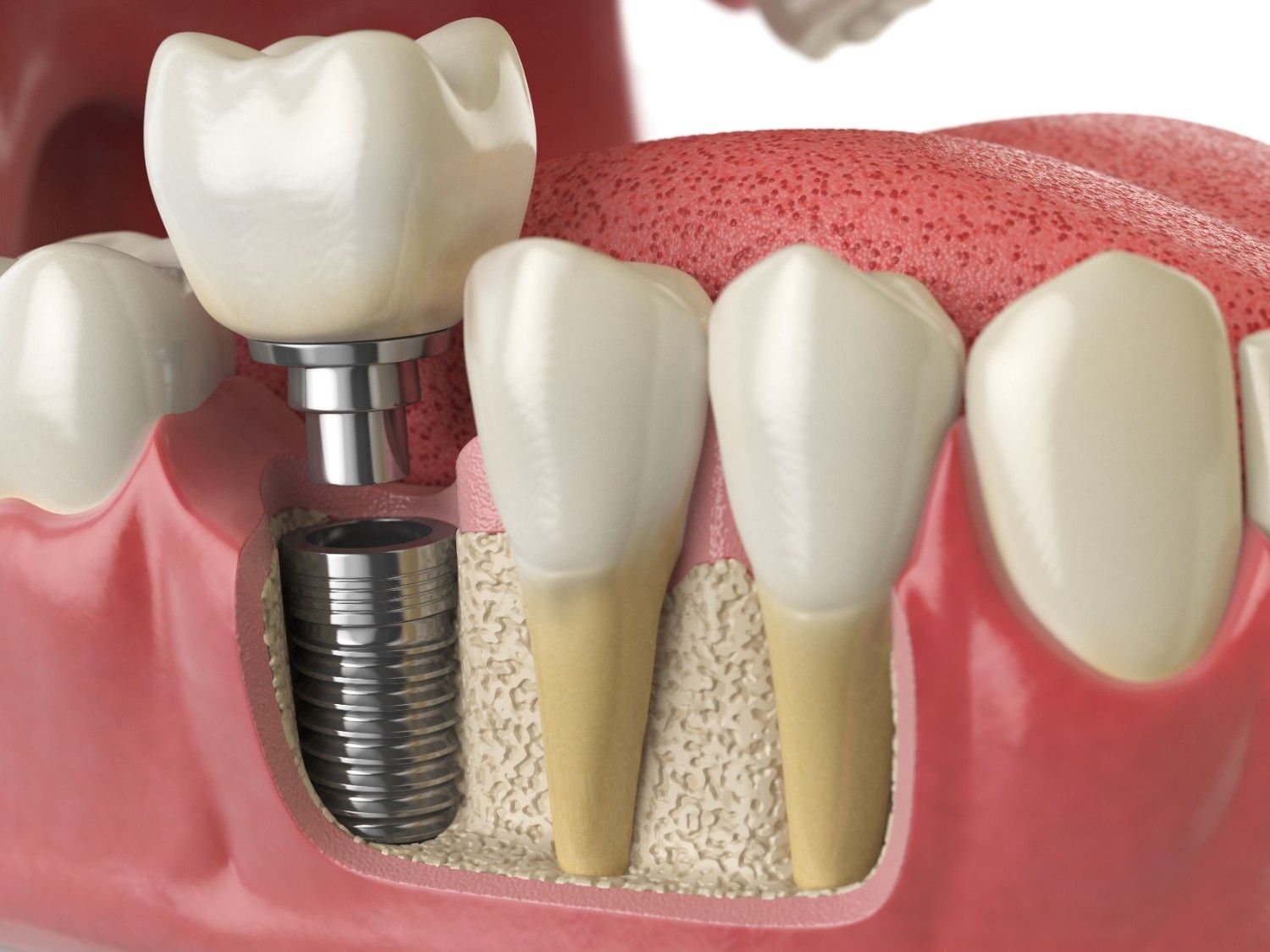
A single tooth implant is ideal for replacing a missing tooth without affecting neighbouring teeth. For this type of implant, a single titanium post is surgically placed in the jawbone, acting as a sturdy foundation for a custom-made dental crown. This restores your bite and maintains the natural appearance of your smile. With proper care, a single tooth implant can last a lifetime.
02
Implant Bridges
Implant bridges are perfect for patients who are missing multiple adjacent teeth. Unlike traditional bridges, which rely on natural teeth for support, implant bridges are anchored by dental implants, preserving the health of your surrounding teeth and jawbone.
03
All-On-4 Dental Implants
For patients missing most or all of their teeth, All-on-4 dental implants in Melbourne offer a revolutionary full-arch restoration. This technique uses just four strategically placed implants to support a complete set of fixed replacement teeth.
All-on-4 dental implants usually have 10 to 14 teeth per arch, depending on available bone and implant position. This configuration is designed to restore a full set of upper or lower teeth. With a shorter recovery time and a secure fit, this option is a life-changing, permanent solution for restoring your smile.
Your Journey to a Confident Smile
01 Initial consult and CBCT scan
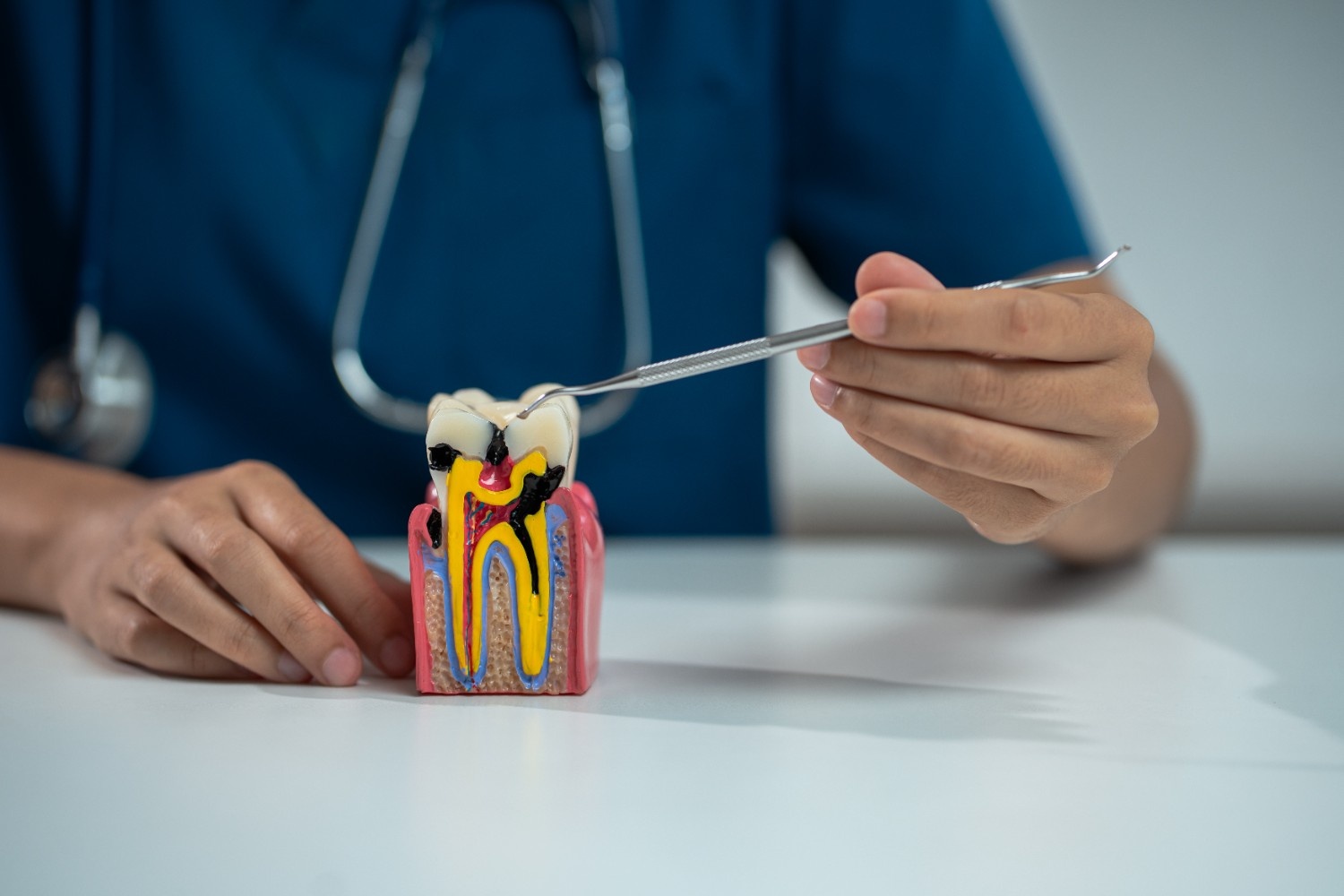
To start with, we'll conduct a comprehensive examination, including a Cone Beam CT (CBCT) scan, a state-of-the-art imaging tool that helps us get a 3D view of your teeth, jawbone, and surrounding structures so we can pinpoint the best implant placement.
02 Customised Treatment Plan
We’ll provide you with a detailed customised treatment plan, outlining the type of implants that will be used, the number needed, and the timeline for each step. We’ll also discuss payment options and any financial assistance available to you. Finally, we'll perform an intraoral scan to ensure a precise fit for your dental implants and crown.
03 Implant Surgery
Our skilled team uses the latest technology and techniques to ensure a safe and comfortable experience. The surgery itself is typically performed under local anaesthesia, and we take every measure to minimise discomfort. The implant is placed into your jawbone, where it will eventually integrate and become a permanent part of your smile.
04 Implant Crown
Once your implants have successfully fused with the bone (a process that takes a few months), we move on to the final step: placing your implant crown. The crown is custom-designed to match the shape, size, and colour of your natural teeth, ensuring that it looks completely natural in your mouth.
05 After-care
We'll guide you through the healing process, helping you manage any discomfort and providing tips on how to keep the implant area clean to prevent infection.
03 9397 6021
- 01
Initial consult and CBCT scan
To start with, we’ll conduct a comprehensive examination, including a Cone Beam CT (CBCT) scan, a state-of-the-art imaging tool that helps us get a 3D view of your teeth, jawbone, and surrounding structures so we can pinpoint the best implant placement.
- 02
Customised Treatment Plan
We’ll provide you with a detailed customised treatment plan, outlining the type of implants that will be used, the number needed, and the timeline for each step. We’ll also discuss payment options and any financial assistance available to you. Finally, we’ll perform an intraoral scan to ensure a precise fit for your dental implants and crown.
- 03
Implant Surgery
Our skilled team uses the latest technology and techniques to ensure a safe and comfortable experience. The surgery itself is typically performed under local anaesthesia, and we take every measure to minimise discomfort. The implant is placed into your jawbone, where it will eventually integrate and become a permanent part of your smile.
- 04
Implant Crown
Once your implants have successfully fused with the bone (a process that takes a few months), we move on to the final step: placing your implant crown. The crown is custom-designed to match the shape, size, and colour of your natural teeth, ensuring that it looks completely natural in your mouth.
- 05
After-care
We’ll guide you through the healing process, helping you manage any discomfort and providing tips on how to keep the implant area clean to prevent infection.
Why Choose Parker
Dental for Implants?
Parker Dental is counted among the best dentists in Melbourne, and are leading providers of denture implants in Williamstown. With a trusted team of dedicated professionals committed to quality patient care, you can expect:
- Tailored treatment plans
- Outstanding patient care
- Convenient location in Williamstown, Melbourne
- SuperCare available to assist with dental implants cost
- Preferred provider for Medibank, HCF and BUPA
03 9397 6021
Financing Your
Dental Implants
in Melbourne
Financing Your Dental Implantsin Melbourne
At Parker Dental, we know that financial planning is a major deciding factor for our patients. That’s why we’re committed to transparent pricing and flexible payment options through schemes like SuperCare.

How much do dental implants cost in Melbourne?
When it comes to dental implants, Melbourne prices can vary depending on the complexity of the procedure and the clinic chosen. For example, a single tooth implant could cost as little as $3,000, while All-on-4 dental implants Melbourne cost upwards of $25,000 per arch.
The price will vary based on a number of factors including the city in which you live, the experience and specialisation of the dentist you choose, the quality of the materials used, optional extras like sleep dentistry, and the need for additional procedures like bone grafting and sinus lifts.
In general, you can expect to pay roughly the following for dental implants in Melbourne;
· $3,000-$6,500 for a single tooth implant
· $6,700-$20,500 for an implant supported bridge
· $5,000-$18,000 for an implant retained denture
· $23,000-$27,000 for an All-on-Four dental implant
· $15,000-$90,000 for full mouth implants
Are dental implants covered by Medicare?
Medicare doesn’t cover dental implants, but many private health insurance plans offer partial coverage, and Parker Dental is a preferred provider for several major insurers, including Medibank, HCF and BUPA.
These plans will usually cover at least part of the overall cost.
Additionally, if general anaesthetic is required, Medicare will usually cover at least 50% of the anaesthetist’s fee
How can I use my super for implants?
At Parker Dental, patients can also utilise SuperCare to pay for dental implants. As part of this scheme, you can access your super to pay for your treatment, your partner’s or your children’s treatment. You may choose to apply for funding to cover the entire cost of the procedure or part of the cost.
The SuperCare Payment Option is available for dental implants, orthodontics, root canals, periodontics, oral and maxillofacial surgery, or any treatment that helps any condition causing you pain or discomfort.
To do this, you will have to provide supporting documentation from a dental professional to your super fund and the Australian Taxation Office (ATO). Funds for the procedure will only be released with valid proof of suffering and pain due to your oral condition.
The medical report that you submit must clearly outline what you are experiencing and exactly why the procedure is necessary for your health and safety going forward.
Still have questions? Feel free to reach out to our friendly team or read our comprehensive guide on dental implant costs in Melbourne.
Meet the Parker Dental Team
Our skilled and friendly team is dedicated to providing top-notch care. With a focus on
expertise and patient comfort, we’re here to make your dental journey a positive one.

Dr Brendon Parker
Implant Specialist
Dr Mathew Elti
Implant Specialist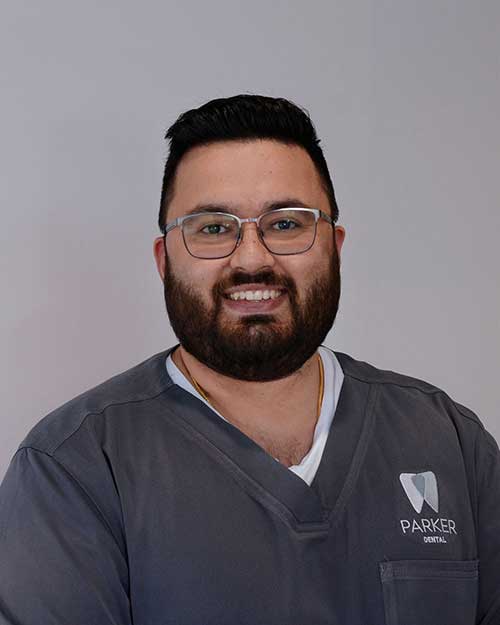
Dr Aurelius Sladen
Implant Specialist
See the Transformation
Explore real results from our implant treatments. Our before-and-after photos showcase the difference a confident smile can make


03 9397 6021
We Look Forward to Seeing You!
Whether it’s your first visit or a return appointment, our team is excited to welcome you.
13A Douglas Parade, Williamstown VIC 3016
Call:
03 9397 6021
Mail:
[email protected]
Opening Hours:
Monday: 8:00 AM – 6:00 PM
Tuesday to Thursday: 8:00 AM – 7:00 PM
Friday & Saturday: 8:00 AM – 1:00 PM
Sunday: Closed
Your Questions
Answered
Got questions about dental implants? We’ve got the answers. Explore our FAQs to learn more about the implant process, recovery, and what to expect.
How long do All-on-4 implants last?
With proper care and a high level of dental hygiene, All-on-4 implants should last 10-15 years. Certain habits like smoking or excessive alcohol consumption can reduce the lifespan. However, some patients report All-on-4 implants lasting 25 years or more, making them a durable and long-lasting solution for full-arch tooth replacement.
How long do dental implants last?
Dental implants last well over 20 years, compared to an average of 10 years for bridges and dentures. The titanium screw will likely last the rest of your life. Once it fuses to the bone, it becomes an integral part of your jaw and should need no further attention.
The attached artificial tooth is the least durable part of the implant, and is likely the only component that will need replacing. You can expect to replace a crown roughly every 10 years, depending on if it’s made of porcelain, ceramic, or pressed ceramic, and how diligent you are about oral hygiene and regular cleaning.
As a trusted supplier of affordable dental implants in Melbourne, Parker Dental can advise you on what material is best for you, and how to ensure that your implant lasts as long as possible.
Ready to get started? Contact us today for a free consultation.
How long after dental implants can I eat normally?
You should be able to eat relatively normally 1-2 weeks after surgery.
However, for the first 24-48 hours, you should be eating soft, preferably liquid foods. Following this, you can eat soft foods, while still being mindful of texture and temperature.
While your diet will largely return to normal after 1-2 weeks, you should continue avoiding hard, crunchy, or chewy foods for up to six months. Spicy and highly acidic foods are also best avoided.
Once the dental implants have fully integrated, you can resume your normal diet. This is one of the major advantages of dental implants – they function just like real teeth, so once the healing process is complete you can eat without limitations.
How painful are dental implants?
What are the advantages of dental implants over dentures?
Dentures are faster, less invasive, and initially more affordable. But while dentures might seem cheap, dental implants win out in almost every category long term.
Unlike dentures, dental implants are a permanent solution that look and feel like your real teeth. This means it’s easier to chew, and you’re not restricted in what you can eat. Implants can also help prevent bone loss by stimulating the jawbone. While the upfront cost is higher, dental implants are actually less expensive in the long run.
Who can’t have implants?
To be a good candidate for dental implants, you must have good oral hygiene. A patient who doesn’t brush or floss regularly is unlikely to be a good candidate. For a successful dental implant surgery, the patient must also have sufficient bone mass.
Being generally fit and healthy is crucial to withstand the procedure and reduce the risk of complications. Smokers will be required to quit in the period leading up to the surgery and throughout the healing process, as smoking can significantly hinder recovery.
Certain health conditions, such as diabetes, rheumatoid arthritis or autoimmune diseases, can cause an implant to fail. Therefore, you might be precluded from dental implants.
Do dental implants hurt?
The pain associated with a dental implant procedure varies from person to person in Australia, but generally, it is considered a minimally invasive and relatively painless procedure.
A local anaesthesia is used during the procedure, which numbs the area where the implant will be placed. While you are, in most cases, awake during the procedure, you shouldn’t feel any pain thanks to the anaesthesia.
In the aftermath of the implant procedure, it is common to experience mild discomfort due to swelling and bruising in the area of operation. This pain should not be debilitating though, and over-the-counter pain relievers such as ibuprofen should be enough to manage it.
If it has been more than a few days, any discomfort associated with the procedure should begin to subside. However, if the pain persists or gets worse, then it is important to contact your dentist to check everything out.
What are the three types of dental implants?
The most common types of dental implants in Australia are endosteal implants, subperiosteal implants, and zygomatic implants.
Each of these different types of implants is distinguished by its placement in the jawbone.
- Endosteal Implants: Are the implants that the majority of Australians get if they have a healthy jawbone. Endosteal Implants are a screw-shape device that is surgically placed into the jawbone to slowly fuse with the bone. This process is known as osseointegration. Once you’ve healed from the procedure, an abutment (a connector piece) is attached to the implant with a crown placed on top (an artificial tooth).
- Subperiosteal Implants: These implants are placed on top of the jawbone, but under the gum tissue. They are used when there is not enough healthy jawbone to support traditional implants. Subperiosteal implants are typically considered when the bone loss is too severe for endosteal implants but where bone grafting isn’t an option. The implant sits directly on top of the bone, providing a stable base for attaching artificial teeth.
- Zygomatic Implants: Are the rarest of the three, and are used when there is insufficient bone in the upper jaw. These implants are anchored into the cheekbone, and by doing this, they eliminate the need for bone grafting. This technique provides a stable oral foundation for those requiring a full arch of fixed replacement teeth. These are the best choice for those who are not candidates for traditional dental implants. These are mostly placed by a specialist oral surgeon under general anaesthetic.
It is crucial to consult with your dentist or oral surgeon to assess your specific needs and determine which implant type will provide you with the best long-term results and fit for your unique circumstances.