
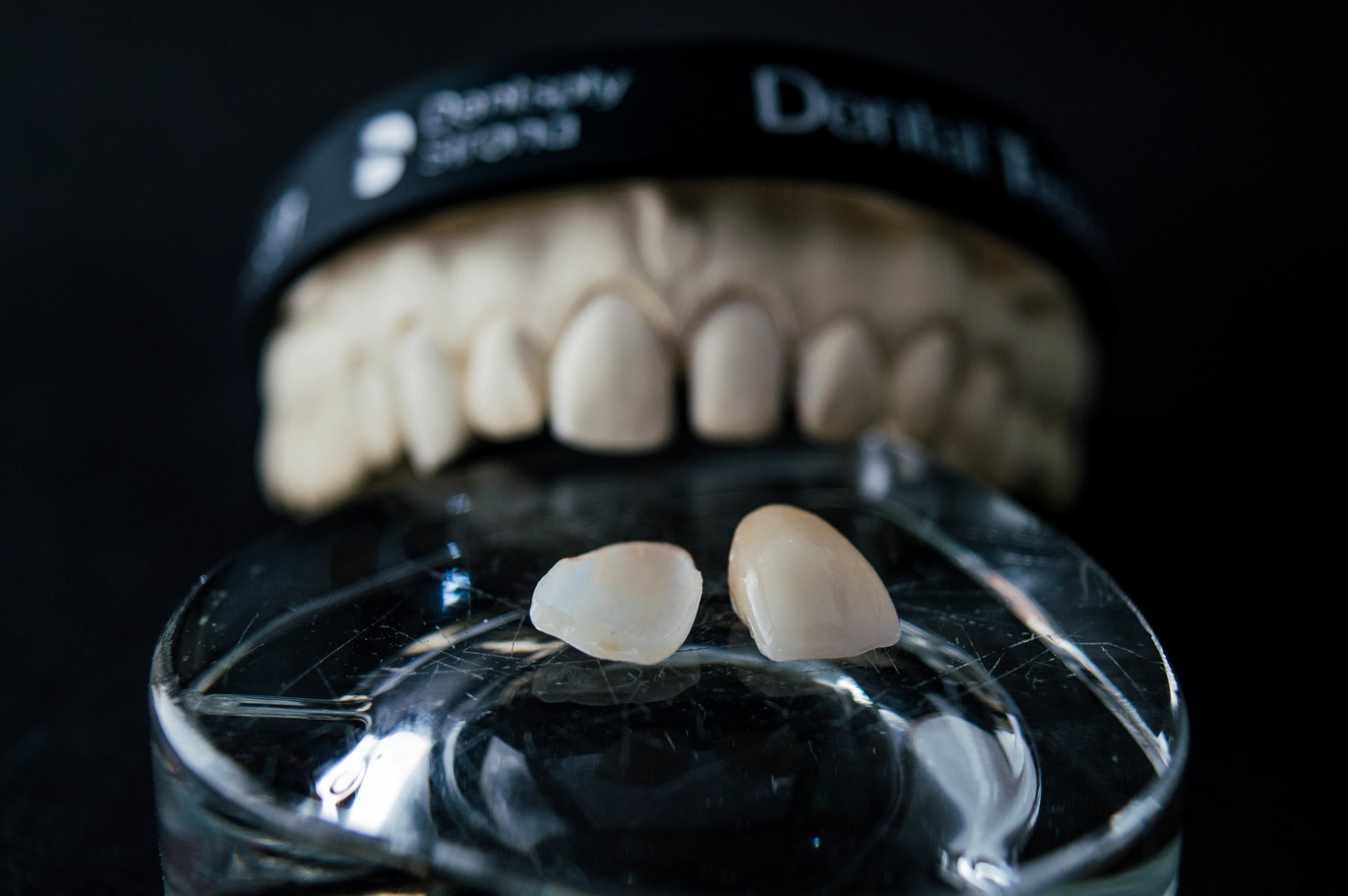
If you’re looking to improve your smile at a Williamstown dentist, veneers could be the solution. However, you may be wondering which type, porcelain or composite, is best suited to your needs.
As a leading Melbourne dentist, we get these questions regularly and understand that it can be overwhelming with so many orthodontic treatments available.
In this Parker Dental article, we will break down what composite and porcelain veneers are, the key differences between them, who is a good candidate for both treatments, and help you decide which treatment is best for you and your smile.
What Are Veneers?
Veneers have become increasingly popular in Melbourne in recent years, but what are they? Veneers are custom-made thin shells designed to seamlessly fit over the front surfaces of your teeth to enhance their appearance. Veneers are both strong and durable when performed by a trained dentist and are a top solution for those with chipped, discoloured, or crooked teeth.
The two main types of veneers are porcelain and composite.
Porcelain Veneers in Melbourne
Porcelain veneers are the most common form of dental veneers. These thin, custom-made ceramic shells, created in a dental laboratory, mimic the natural look of enamel and are favoured for their ability to deliver a bright, uniform, and long-lasting smile. Porcelain veneers are widely supported by the dental community for their strength, durability, and aesthetic appeal.
Composite Veneers in Melbourne
Composite veneers are a more affordable alternative to porcelain veneers. These veneers are made from a plastic called resin and, instead of being created elsewhere, are shaped and directly applied to your teeth by the dentist during a single visit. If you are looking to improve the appearance of your teeth but are on a budget, composite veneers can be a great option. Overall, composite veneers are an ideal choice for those looking to correct minor cosmetic issues.
Composite vs Porcelain Veneers: Key Differences
So what are the key differences between composite and porcelain veneers? Well, there are a few considerations to keep in mind when breaking down the two popular veneer options. We’ve created the table below to clearly break down the main differences between the two.
| Veneers Feature | Porcelain Veneers | Composite Veneers |
| Application of Veneers |
|
|
| Procedure Time |
|
|
| Veneers Durability |
|
|
| Stain Resistance |
|
|
| Appearance |
|
|
| Tooth Removal |
|
|
| Veneers Longevity |
|
|
| Suitability |
|
|
| Maintenance Required |
|
|
If you are in Melbourne and wondering which veneer type is right for you, it is a great idea to sit down with your dentist to discuss the options available to you and which one is the ideal choice.
What Is The Difference In Price Between Composite and Porcelain Veneers?
There is a stark difference in the cost of veneers in Melbourne, especially between composite and porcelain options.
Composite Veneers Cost in Melbourne in 2026
Composite veneers cost, on average, between $600 and $1,500 per tooth in Melbourne. However, this price can vary from practice to practice, especially when it comes to experience and a dental practitioner’s proven track record.
Porcelain Veneers Cost in Melbourne in 2026
Porcelain veneers typically cost between $1,500 and $2,500 per tooth in Melbourne.
However, this price can vary from practice to practice, especially when it comes to experience and a dental practitioner’s proven track record.
Why Is There A Price Difference Between Composite And Porcelain Veneers?
Why is there such a big difference in price between composite and porcelain veneers in Australia? Porcelain veneers cost more on average due to the materials and the dental procedure involved. Porcelain veneers are typically custom-designed in a dental lab, whereas composite veneers can be applied directly to your teeth in one session.
| Number Of Veneers | Composite Veneers | Porcelain Veneers |
| Single Tooth |
|
|
| 6 Veneers |
|
|
| 8 Veneers |
|
|
| 10 Veneers |
|
|
Who Is A Good Candidate For Composite Veneers and Porcelain Veneers?
Here is a complete breakdown of what an ideal candidate looks like for both composite veneers and porcelain veneers. It is important to remember that not everyone qualifies for dental veneers, and several factors are considered when determining eligibility.
Ideal Candidate For Composite Veneers:
- Have Minor Cosmetic Issues: Composite veneers are best for minor imperfections such as chips, gaps, or slight discolouration.
- Seeking a More Affordable Option: Composite veneers are a cost-effective alternative to porcelain veneers and are suitable for patients on a budget.
- Healthy Teeth and Gums: Candidates will ideally have healthy teeth and gums. The patient must not have any active gum disease or tooth decay, as these conditions must be addressed before veneers can be used.
- Looking for a Fast Solution: Since the procedure requires only a single visit, composite veneers are ideal for those seeking fast results.
- Vigilant About Maintenance: Due to composite veneers being less durable than porcelain and more prone to staining. An ideal patient would be committed to regular maintenance and care, such as avoiding staining foods and strong oral care habits.
- Patients Looking For a Reversible Treatment: If you are looking for a cosmetic dental treatment that is also reversible, composite veneers are a strong option.
Ideal Candidate For Porcelain Veneers:
- Sufficient Natural Tooth Enamel: You must have a strong natural tooth base to properly support veneers. Candidates should have sufficient tooth enamel for bonding without compromising tooth strength.
- Searching for a Long-Lasting Solution: Those seeking a durable, long-term cosmetic solution with less need for frequent repairs or replacements are better suited to porcelain veneers. While they cost more, the longevity of porcelain veneers is a major benefit.
- Looking for a Less Invasive Dental Procedure: Compared to dental crowns, veneers require minimal alteration of the natural tooth and are overall a less invasive option.
- Realistic Treatment Expectations: Veneers are highly effective for enhancing your smile. Don’t go in hoping for a whiter-than-snow look; your veneers should naturally complement your facial features.
- Have Significant Cosmetic Concerns: Porcelain veneers are ideal for addressing more severe issues. If you have large gaps, uneven teeth, or severe discolouration, then porcelain veneers are a strong option.
- Time Consciousness and Irreversibility Comfort: An ideal patient for porcelain veneers should understand that treatment typically requires 2 or more visits. They should also be comfortable with the fact that porcelain veneers are an irreversible treatment.
What Are The Oral Health Requirements For Veneers?
If you are after long-term durability in your veneers, then you first need to get any other oral issues or conditions sorted out. Maintaining strong oral hygiene habits is essential for anyone considering getting dental veneers.
Dentists highlight several requirements a patient must meet before they are considered a good candidate for veneers.
- Healthy Teeth and Gums: It is essential that any existing cavities or decay are addressed and treated first before veneers are placed. To be effective, veneers require a strong and healthy tooth structure; if the tooth structure is weak or unhealthy, bonding will be poor. The same goes for your gums. They should be free of any infection, inflammation or periodontal disease (gum disease).
- Adequate Tooth Structure: To be effective, veneers require sufficient enamel for proper bonding. If your tooth has been heavily worn down or lacks sufficient enamel, veneers may not be a viable option.
- No Severe Tooth Damage: If you have severe cracking or wear, veneers may not be able to effectively restore the tooth. Other restorative treatments, such as dental crowns or fillings, may be recommended by your dentist instead.
- Strong Oral Hygiene Habits: Proper oral hygiene is essential before getting veneers. Getting a thorough cleaning to remove all plaque, tartar, and bacteria. This is because each of the previously mentioned elements can affect the bonding of the veneer.
- No Teeth Grinding: Teeth grinding or clenching, otherwise known as bruxism, can be incredibly damaging to veneers over time. If you frequently grind your teeth, your dentist may suggest a nightguard to protect your veneers from excessive wear.
Ensuring that you meet these oral health requirements will help maximise the success of your veneers and ensure they last as long as possible, which is essential given their rather high up-front financial cost. Your dentist will assess each of these factors during a thorough consultation before recommending veneer treatment.
How To Choose The Right Type Of Veneers For Me?
Choosing between composite vs. porcelain veneers, or even between veneers vs. crowns, is a process that requires careful thought. The right choice between porcelain and composite veneers depends on individual goals, budget, lifestyle habits, and current dental health.
Here is a helpful guide to help you decide which type of veneers makes the most sense for you.
- Define Your Cosmetic Goals: Are you looking to fix some minor issues? Or are you after a very dramatic smile transformation that mimics the natural look of your teeth? If it’s the first, choose composite veneers; if it’s the latter, choose porcelain veneers.
- Budget Considerations: Composite veneers are the more affordable option, and are a great choice if you are looking for great value without the high cost. Porcelain veneers are significantly more costly upfront, but they offer a longer lifespan, making them a better investment. What do you care about more? Long-term value or upfront costs?
- Time & Procedure: Composite veneers can be completed in most cases in one visit, while porcelain veneers usually require multiple visits, including impressions, lab fabrication, and final veneer placement. If time is a big factor for you, then composite will probably be the better option.
- Durability & Maintenance: Composite veneers are generally less durable and prone to staining, but are easily repaired. On average, composite veneers have a lifespan of 5 to 7 years when cared for properly. Porcelain veneers, on the other hand, are highly durable and stain-resistant and can be considered a more permanent cosmetic restoration. Porcelain veneers can last for more than 15 years. If you are focused on low maintenance and longevity, porcelain veneers are the right choice.
- Evaluate Your Own Oral Health: To be a good candidate for both porcelain and composite veneers, you must have healthy gums and no untreated decay, along with sufficient enamel. Your dentist will assess bite alignment, enamel thickness, tooth health, and any habits such as bruxism before recommending a type of veneer.
- Seek Professional Advice: It is always a good idea to consult a dentist for professional advice on veneers. Your dentist will review your X-rays, bite analysis, enamel thickness, smile goals and expectations. This will not only allow you to find out if veneers are actually right for you, but a dentist can often generate digital mock-ups so you can see what veneers may look like on you.
Final Thoughts: Composite vs Porcelain Veneers
It is important to remember that neither composite nor porcelain veneers are considered to be “universally best”. The porcelain vs. composite veneer argument is not as cut-and-dry as one being better than the other. Instead, the right veneers for you are usually determined by what suits your smile, your budget, and your lifestyle. Having a detailed consultation with your Melbourne dentist is the best way to find the right veneers for you.
If you are looking for veneers in Melbourne, whether they be composite or porcelain, our team at Parker Dental is here to help. Based in Williamstown, we have established ourselves as a trusted Melbourne dentist, with a highly experienced and talented team dedicated to making your dental visit a positive, calm experience.